
FREE SPI
PRACTICE TEST (2026)
Are you preparing for your SPI (Sonography Principles and Instrumentation) exam?
The best way to assess your readiness is by taking a realistic practice test that reflects the latest 2026 SPI syllabus.
There’s only one thing standing between you and an exciting career as an ultrasound technician: your SPI exam!
Our free practice test (below) helps you prepare for and pass the written portion of the exam. Before stepping into the practice test, let’s see what is SPI exam and why does SPI exam matters.
What Is SPI Exam?
The SPI Exam is a certification test administered by ARDMS that evaluates your understanding of ultrasound physics and instrumentation. It’s a key step for those pursuing a career in diagnostic medical sonography.
It covers topics such as image optimization, transducer management, and Doppler imaging principles. Passing the exam qualifies you for ARDMS credentials and can significantly boost your career in sonography.
The exam meets the fundamental physical principles and instrumentation requirements for the RDMS, RDCS, RVT, and RMSKS credentials. Let’s see more briefly about it.
Why Take SPI Exam?
Demonstrates Competency: Validates your expertise in ultrasound physics and instrumentation, essential skills for sonographers.
Mandatory Certification Requirement: Acts as a key prerequisite for obtaining ARDMS certification.
Boosts Career Prospects: Enhances professional credibility and opens up advanced career opportunities in sonography.
Requirements for the SPI Exam
The Sonography Principles and Instrumentation (SPI) Exam is a critical step for anyone pursuing an ARDMS credential. To sit for the exam, you must have completed any of the following:
- A college-level or post-secondary physics course (grade C or higher)
- An approved ultrasound physics review seminar is worth at least 12 ARDMS-approved CME credits.
With any one of these transcripts or certificates in hand, you’re ready to take the next step.
Registration & Test Day Process
Exam Registration:
Create an ARDMS account and submit your eligibility documentation. Once your application is reviewed and approved (typically within 10 days), you’ll receive an Examination Confirmation Letter (ECL).
Exam Fees:
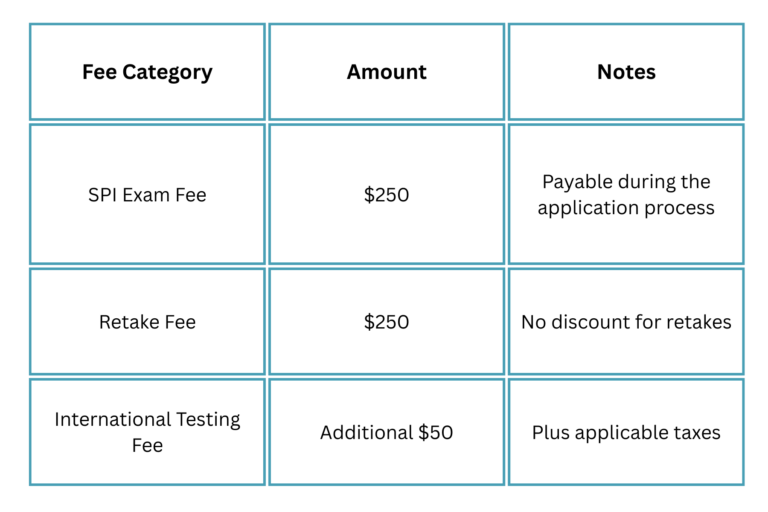
Scheduling Your Exam:
After receiving your ECL, schedule your exam through Pearson VUE. Choose from in-person testing at local centers or online proctored testing that fits your schedule.
Scoring & Retakes:
The exam is scored on a 300–700 scale, with 555 as the minimum passing score. Unofficial scores are provided immediately for in-person exams, while online scores are available shortly after completion. If necessary, you may retake the exam after a 60-day waiting period.
What the SPI Exam Covers
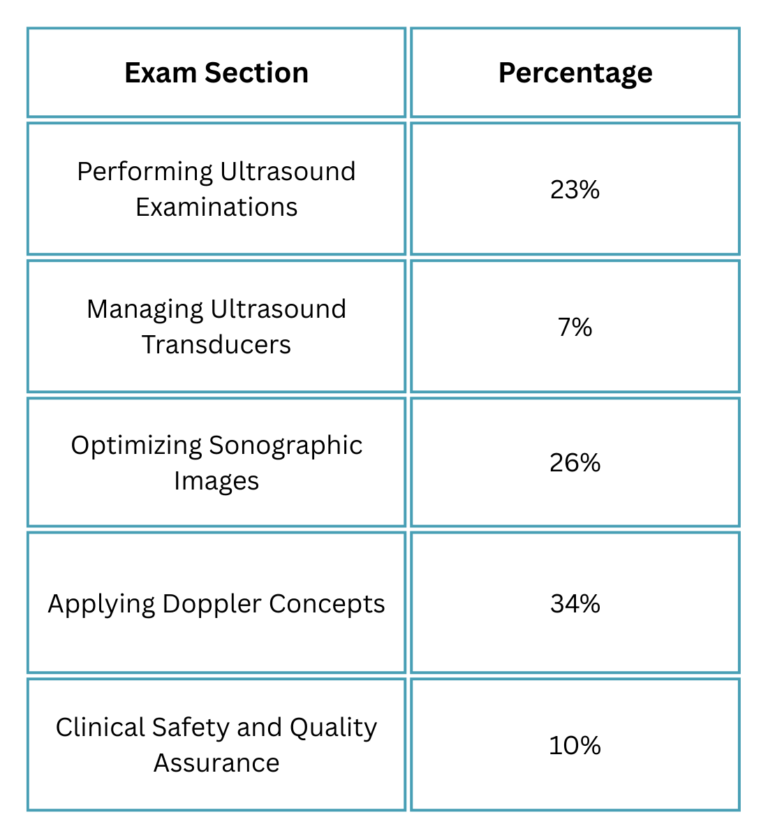
The SPI exam includes 110 multiple-choice questions that need to be completed within 2 hours. The exam content is divided into five key areas, each covering essential knowledge and skills for sonographers:
- Performing Ultrasound Examinations
This section focuses on the basics of conducting ultrasound exams. It covers reviewing patient history, correcting imaging artifacts, and following standard examination protocols. - Managing Ultrasound Transducers
Understanding the different types of transducers, their components, and how frequency impacts the quality of the exam is essential in this section. - Optimizing Sonographic Images
This section tests your ability to adjust machine settings, such as frequency, gain, depth, and pulse repetition, to produce clear and accurate images. - Applying Doppler Concepts
A significant part of the exam, this section covers Doppler ultrasound imaging, including color flow patterns, Doppler shift, angle adjustment, and hemodynamic principles. - Clinical Safety and Quality Assurance
This part focuses on maintaining safety and quality in clinical settings, including infection control, equipment maintenance, and following safety protocols.
Key Topics for Mastering SPI Exam
Prepare by focusing on these essential areas:
- Ultrasound Physics Fundamentals
Understand sound wave propagation, tissue density, attenuation, reflection, refraction, and acoustic impedance. - Transducers and Instrumentation
Learn the types and components of ultrasound transducers, and how frequency affects image resolution and depth. - Image Optimization Techniques
Practice adjusting parameters like PRF, PRP, gain, focus, and sector width to fine-tune image quality. - 2D and Doppler Imaging
Study B-mode imaging principles and the nuances of Doppler imaging, including flow mapping and artifact recognition. - Hemodynamics and Blood Flow
Grasp basic hemodynamic principles and how factors like blood pressure and vessel diameter influence Doppler signals. - Patient Care & Safety
Follow best practices for patient positioning, ergonomics, and rigorous infection control to ensure safety and optimal image quality.
Receiving Your SPI Exam Results
- For in-person exams, you receive an unofficial score report immediately at the test center, and official results are posted to your ARDMS account within about a week.
- For online exams, your score report is typically available in your ARDMS account within an hour after completing the test.
About the SPI Practice Test
We use actual questions that appear on the written portion of the SPI exam, so our practice test will help you discover if you’re definitely prepared for the real thing!
Our free practice test (below) helps you prepare for and pass the written portion of the exam: it contains 15 questions, all of which are representative of the questions that appear on the real thing.
Frequently Asked Questions about the SPI Exam
The pass rate for the SPI exam in 2023 was 61% overall. First-time test takers had a higher pass rate of 71%, while repeat test takers had a pass rate of 49%. This underscores the importance of thorough preparation.
Your application will automatically be approved, and you will be able to schedule within a day. You must wait 60 days before you can retake the SPI examination if you do not pass it however, you are welcome to reapply after 3 days.
Yes, the SPI exam involves math related to ultrasound physics, such as calculations for frequency, pulse repetition, and other measurement concepts.
The math is generally at a basic to moderate level, similar to high school physics, and is integrated into the exam’s practical application questions.
The SPI Program is a three-day (27-hour) training course and a separate two-day (16-hour) assessment. Certification lasts for three years as long as the candidate keeps current AMGA Membership and First Aid Certification.
Our Student's Said
Get ready...
here's the practice test!
(Good luck!)
Breeze through your SPI written exam
Don’t risk failure: use SPI Hero to pass first time!
